Demomaking on CPC

I'm taking this blog opportunity to update an old article that can help a casual reader who stumbled here by chance understand what Logon System represents...
What is a "demo-maker"?
The term is used to describe a person who wants to try to achieve the most admirable and improbable feat on a computer.
Generally, "the feat" is called a "demo" and resembles a kind of video and/or music clip, except that all the visual effects are generally not pre-prepared images. Similarly, on the audio side, everything that can produce sound (from polyphonic circuits to simple buzzers and floppy disk drives) is manipulated to produce amazing melodies.
The limited memory, disk, and processor speed capabilities of old 1980s machines don't allow for demos consisting solely of pre-calculated image sequences. This remains possible with modern storage solutions, but remains nonetheless anecdotal.
Generally, demo-makers know their machine(s) quite well. The appeal of old microcomputers lies in their limitations! You have to be clever and rack your brain to achieve things deemed "impossible" by manufacturers. In the 1980s-90s, many principles emerged, and programming, like drawing or music in a production, is considered by some to be art.
The creative driving force is very often the desire to always push technical limits further. It was during this period that ultra-optimized 3D algorithms and music formats still recognized today were born. Even today, every technical constraint pushes programmers using these machines to show remarkable ingenuity.
At the end of the 1990s, the "Moorian" evolution of the PC world saw the emergence of ever more powerful machines with fewer and fewer technical limitations. The video game industry was no stranger to the appearance of super-powerful graphics cards, whose capabilities even exceeded those of the central processor.
This absence of "hardware" limits sparked a return of "logical" limits in the demo world, but I already discussed this in my post about Lovebyte.
The world of demos on old microcomputers has survived. These computers (and old gaming consoles), termed "computer dinosaurs," have become coveted "vintage" museum pieces for nostalgic collectors (but also for speculators who are beginning to make certain machines unaffordable).
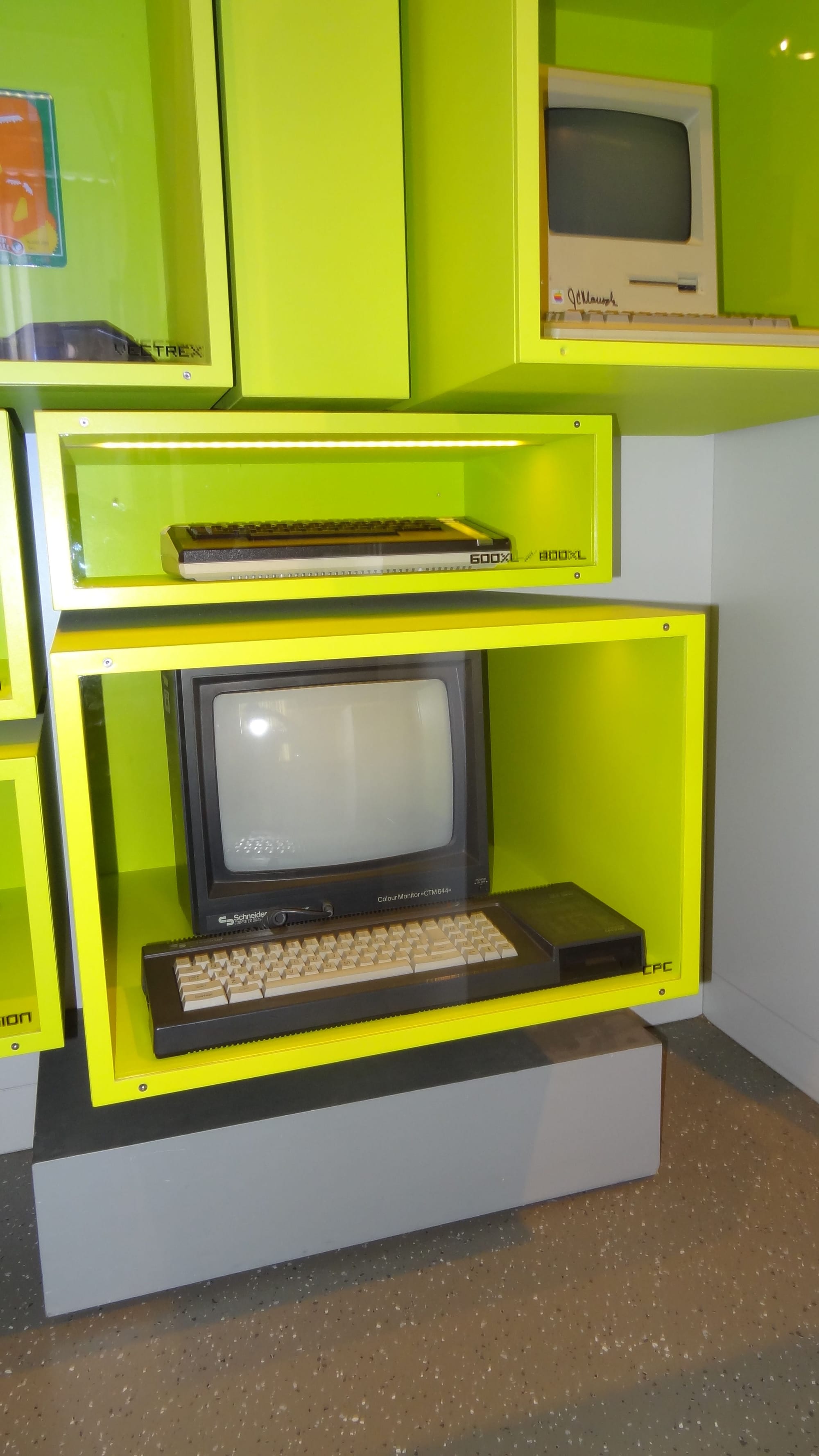
Small communities of enthusiasts still enjoy working on these machines to create games, demos, utilities, and often even complementary hardware to facilitate development, or even emulators on various modern platforms.
This world is often called "oldschool" when represented in the "globalized" universe of demos, through conventions and enthusiast gatherings.
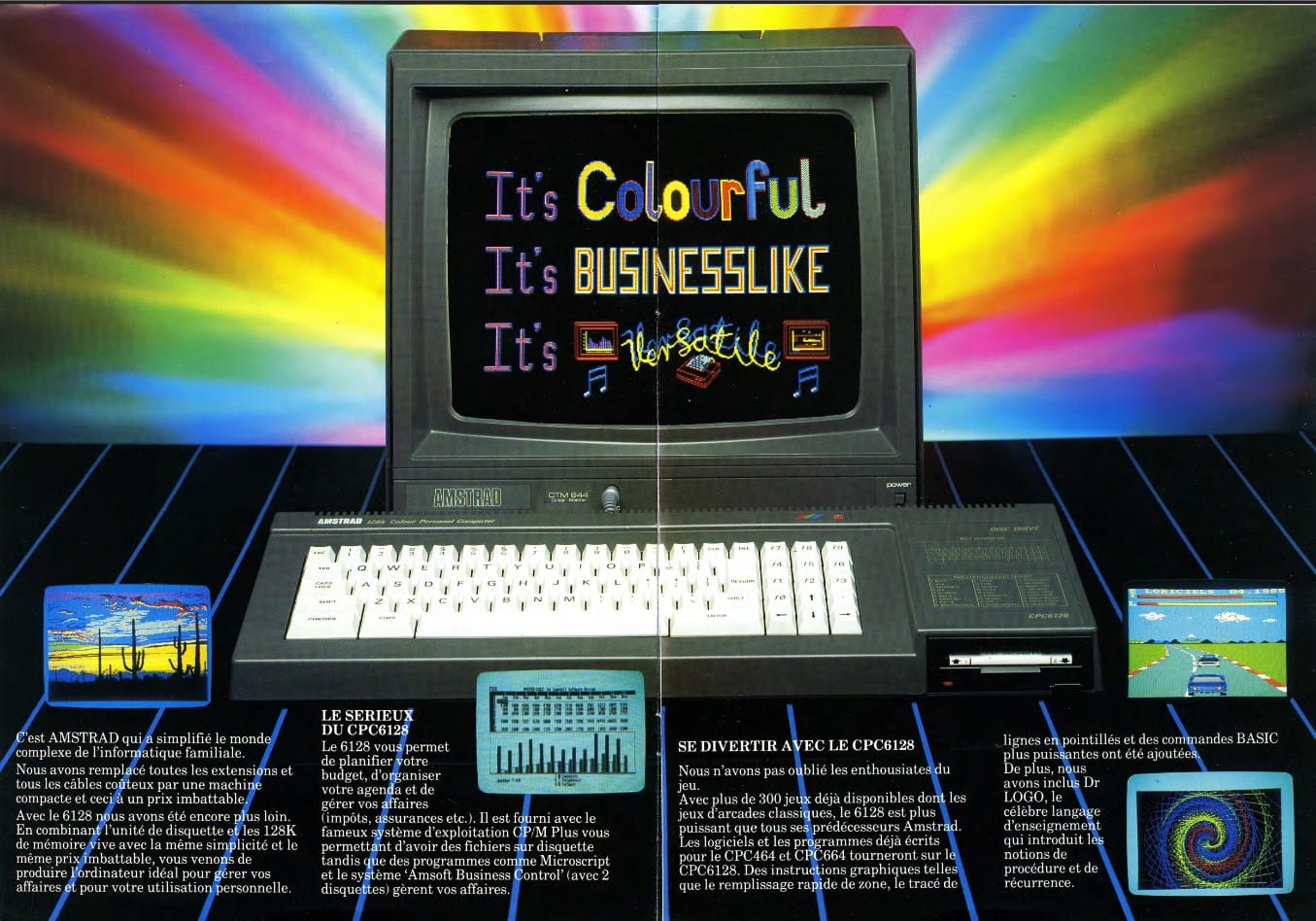
Advertisement for the CPC 6128
It's useful to clarify for younger folks that the motherboard and floppy drive are IN the keyboard, in case the photos aren't explicit enough... After all, these days, Apple does put the computer in the screen!
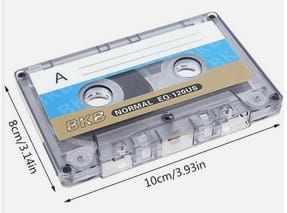
This machine, the CPC 6128, had a few years of glory and was preceded by the CPC 464 and 664. On the 464 model, programs were stored in this object:
 Contributeurs aux projets Wikimedia
Amstrad produced 2 more microcomputers starting in 1990 in the CPC range with the CPC 464+ and 6128+. This range was technically obsolete before even its release, compared to Atari and Commodore machines, and accompanied by deceptive and suicidal marketing. Deceptive because users couldn't access the extra capabilities from Basic, and suicidal because access to these capabilities was patented to force publishers to pay a tithe on every software produced. Despite this, Amstrad still managed to sell a lot by riding on the success of previous models and backward compatibility of the existing software library.
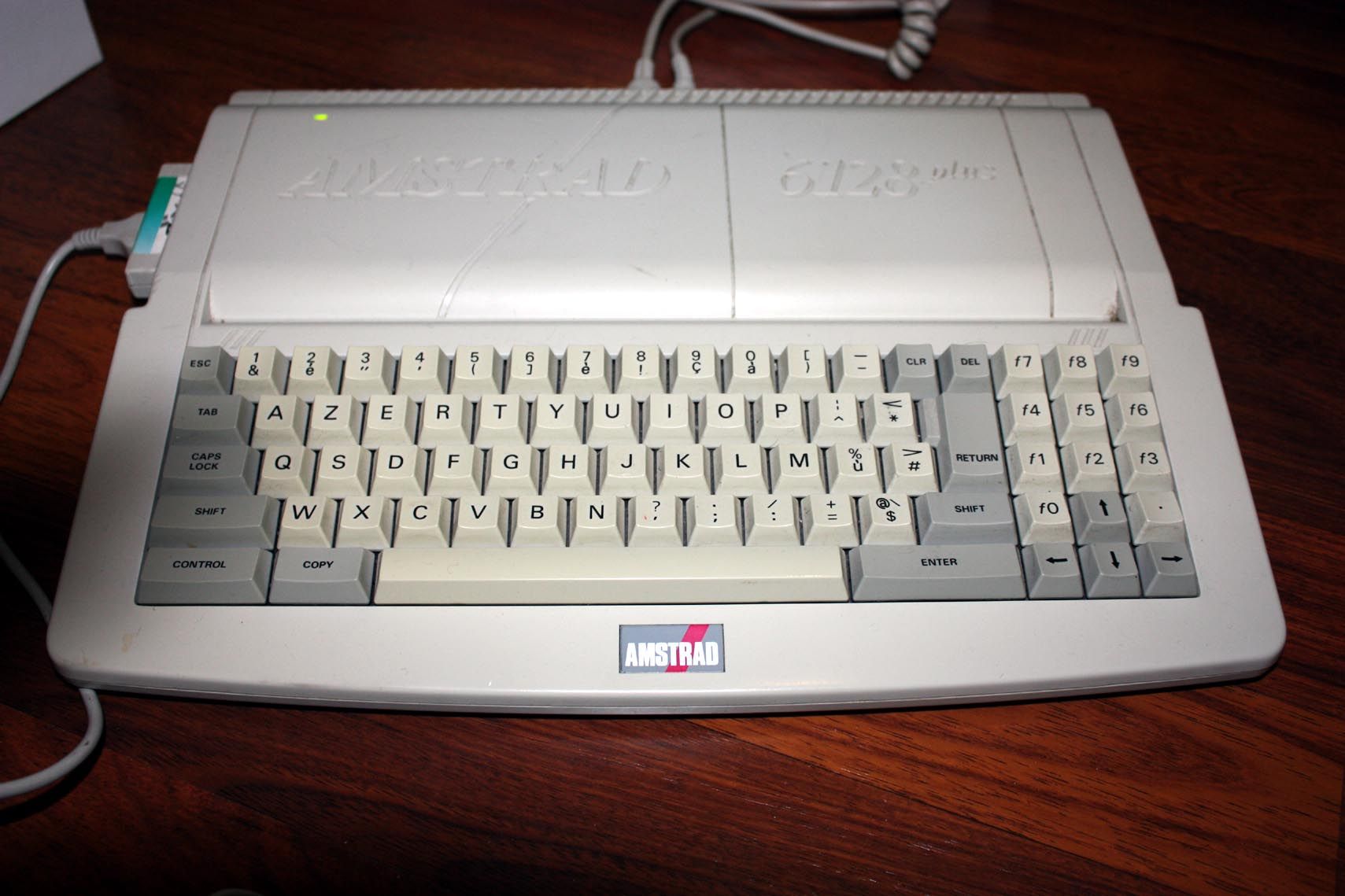
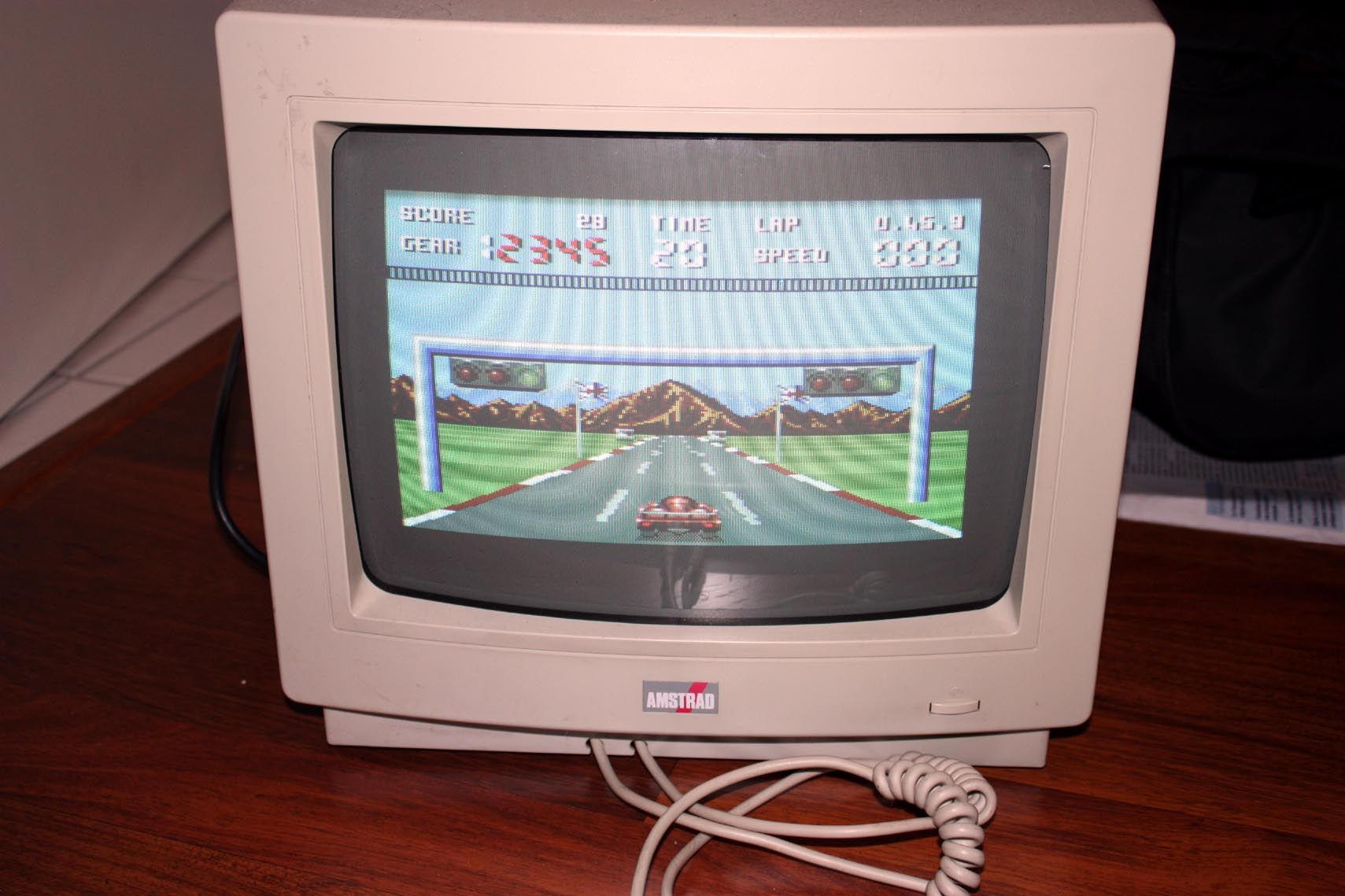
Amstrad 6128 Plus
If you'd like to learn more about these machines:
Contributeurs aux projets Wikimedia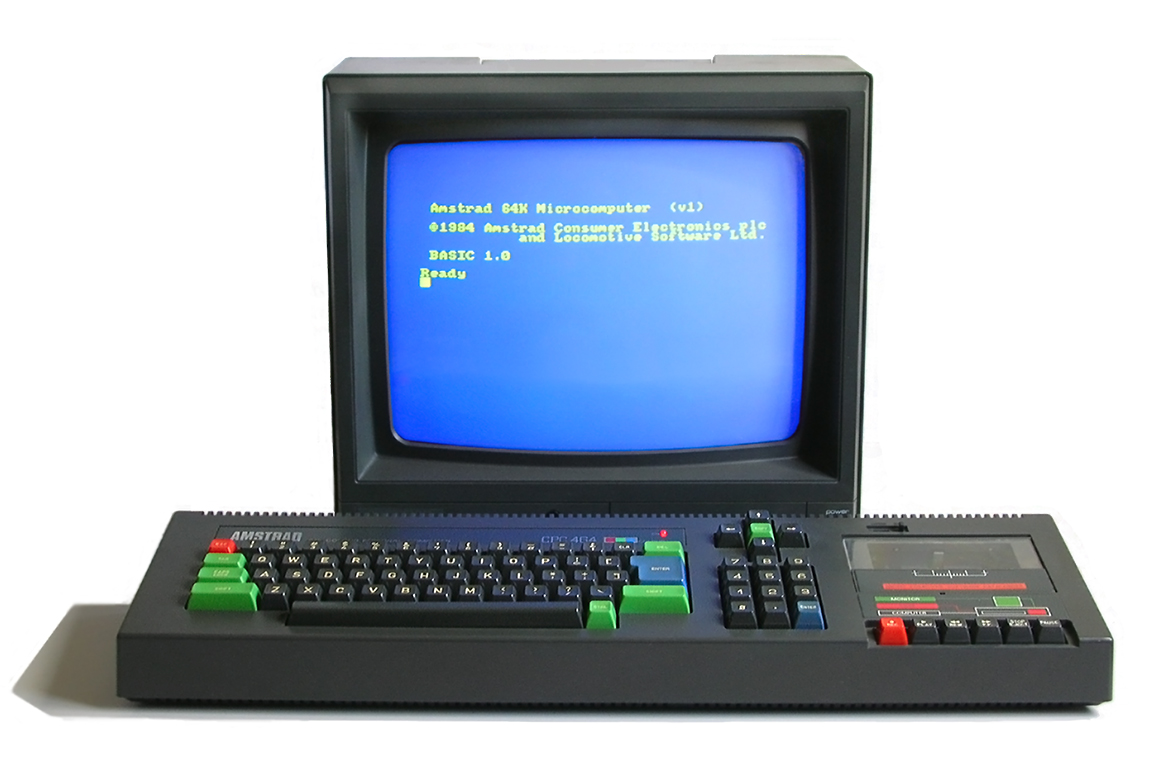
A team effort
Getting back to demo-makers, the visual and audio technical challenge has increased and confirmed that there's strength in numbers.
Generally, demo-makers are identified by a pseudonym. This is true regardless of their role: programmer, graphic artist, or musician (or even a combination of several of these skills).
Several individuals form a "group" to be more effective. This was notably the case for Logon System, created in 1988. Sometimes even "alliances" between "groups" occur for joint projects. All individuals working on a machine belong to what's called a "scene".
Thus there is a scene for each machine, in this case the "CPC scene".
These scenes still exist, and a handful of enthusiasts nostalgic for the "golden years" still have a blast on these antiques. However, don't be mistaken: not everyone is just old-timers. While it's becoming rare, occasionally younger people develop a passion for these machines. Several of these enthusiasts have one foot in computing or electronics, but there are also many people with no "computing background." There are also a few defectors who decide to tackle other machines they could only dream about in the 1980s.
Demos are free and circulate very quickly around the world, especially with the help of the internet today. "Gatherings" are still organized for groups and even multiple scenes to come together. These "gatherings" attract enthusiasts from all over Europe, and the largest scenes still see hundreds of people show up with contests and polished media support, using applications like Twitch or YouTube channels.
The "CPC scene" has always been quite modest, and has held up well against the erosion of time.
I don't claim to have provided the best definition of demomaking here, as it's a vast field that's often difficult to define.
A more general definition is available here for the curious:
Contributeurs aux projets Wikimedia
Newcomers and returning members are always welcome. Generally, communities on these machines share their knowledge fairly easily with beginners.
If you were looking for a new hobby, don't hold back!!
Longshot / Logon System